We are a full-service digital agency dedicated to creating, developing, and marketing high-performing digital experiences. From initial concept to final growth strategy, we blend innovative design with robust development to help your brand thrive. Our end-to-end solutions ensure your digital presence is seamless, impactful, and built to drive measurable results.
25%
Increase in conversions after engaging with Tecbot for a UX/UI overhaul
68%
Increase in ticket sales with the launch of a new ticketing platform
60%
Decrease in cost per acquisition after moving paid media campaigns to Tecbot
243%
Increase in sales across digital channels after a website redesign and ongoing digital marketing campaign management
About us
Driven by creativity and powered by technology, we turn ideas into impactful results. Our focus is centred around the integration of three pillars - Design, Build & Reach.
We are a full-service digital agency dedicated to creating, developing, and marketing high-performing digital experiences. From initial concept to final growth strategy, we blend innovative design with robust development to help your brand thrive. Our end-to-end solutions ensure your digital presence is seamless, impactful, and built to drive measurable results.
25%
Increase in conversions after engaging with Tecbot for a UX/UI overhaul
68%
Increase in ticket sales with the launch of a new ticketing platform
60%
Decrease in cost per acquisition after moving paid media campaigns to Tecbot
243%
Increase in sales across digital channels after a website redesign and ongoing digital marketing campaign management
About us
Driven by creativity and powered by technology, we turn ideas into impactful results. Our focus is centred around the integration of three pillars - Design, Build & Reach.
WordPress vs. Shopify: Which E-commerce Platform is Right for Your SA Business in 2025?
Choosing the right platform for your online store is one of the most critical decisions for your business. Should you opt for the immense flexibility of WordPress with WooCommerce, or the streamlined, all-in-one power of Shopify? This guide breaks down the essential differences in pricing, features, ease of use, and security to help you make an informed decision for your South African business in 2025.
In today's digital marketplace, your e-commerce platform is the foundation of your business. It's your storefront, your checkout counter, and your marketing hub all in one. Two giants dominate this space: WordPress (powered by WooCommerce) and Shopify. While both can help you build a successful online store, they offer fundamentally different approaches.
At Tecbot, we've built and managed stores on both platforms, giving us a deep understanding of their unique strengths and weaknesses. This expert comparison will guide you through every crucial aspect, from initial setup to long-term scalability.
What is WordPress for E-commerce?
WordPress is the world's most popular open-source Content Management System (CMS). Originally designed for blogging, its true power lies in its infinite flexibility. To transform a WordPress site into a fully functional online store, you need a plugin called WooCommerce.
Think of it like this: WordPress is the solid building structure, and WooCommerce is the complete retail fit-out with shelves, tills, and inventory systems. This combination gives you unparalleled control over every aspect of your site's design and functionality.
What is Shopify?
Shopify is a dedicated, all-in-one e-commerce platform. Unlike WordPress, it's not open-source; it's a subscription-based service where everything you need to start, run, and grow an online store is included from the get-go. Shopify handles the hosting, security, and technical maintenance for you.
Its core focus is to make selling online as simple as possible. It's a purpose-built solution designed from the ground up for commerce, offering a streamlined and user-friendly experience for merchants who don't want to get bogged down in technical details.
The Ultimate Showdown: WordPress vs. Shopify
Let's break down the key differences that will matter most to your business.
Ease of Use & Setup
WordPress: The setup process is more involved. You need to arrange your own web hosting, install the WordPress software, find and install a theme, and then install and configure the WooCommerce plugin. While not impossible for a beginner, it presents a steeper learning curve and requires more hands-on technical management.
Shopify: This is Shopify's biggest selling point. You simply sign up for an account, choose a plan, and follow a guided setup process. Hosting, security, and initial setup are all handled for you. You can have a basic store ready to accept payments in a matter of hours.
Design, Themes & Customization
WordPress: Offers almost limitless design freedom. There are thousands of free and premium themes available from countless marketplaces. Combined with powerful page builder plugins like Elementor or Divi, you can create a truly unique and highly customized user experience. The trade-off is that this level of control can be complex to manage.
Shopify: Provides a curated selection of high-quality, mobile-responsive themes (both free and paid) through its own theme store. While customization is straightforward using the built-in editor, it operates within the constraints of the platform. Deep structural changes often require knowledge of Shopify's Liquid templating language or hiring a Shopify Expert.
Core E-commerce Features
WordPress/WooCommerce: The core WooCommerce plugin is robust, covering product management, secure payments, and shipping options. However, many features that businesses consider essential, such as abandoned cart recovery, subscriptions, or advanced shipping rate calculations, often require purchasing separate, paid extensions.
Shopify: Many crucial e-commerce features are built-in. All plans include unlimited products, fraud analysis, and a powerful checkout system. Higher-tier plans automatically include features like abandoned cart recovery and advanced reporting. Additional functionality is available through the well-vetted Shopify App Store.
Payment Gateways & Transaction Fees
WordPress/WooCommerce: You can integrate with virtually any payment gateway that offers a WordPress plugin. This includes popular South African options like PayFast, PayGate, and Yoco. WooCommerce itself does not charge you any transaction fees. You only pay the standard rate charged by your chosen payment processor.
Shopify: Shopify offers its own integrated gateway, Shopify Payments, which removes transaction fees. If you choose to use an external gateway (like PayFast), Shopify charges a transaction fee on top of what the gateway charges. This fee ranges from 2.0% down to 0.5% depending on your Shopify plan.
The All-Important Question: Pricing
This is where the comparison gets interesting, as "free" isn't always cheaper.
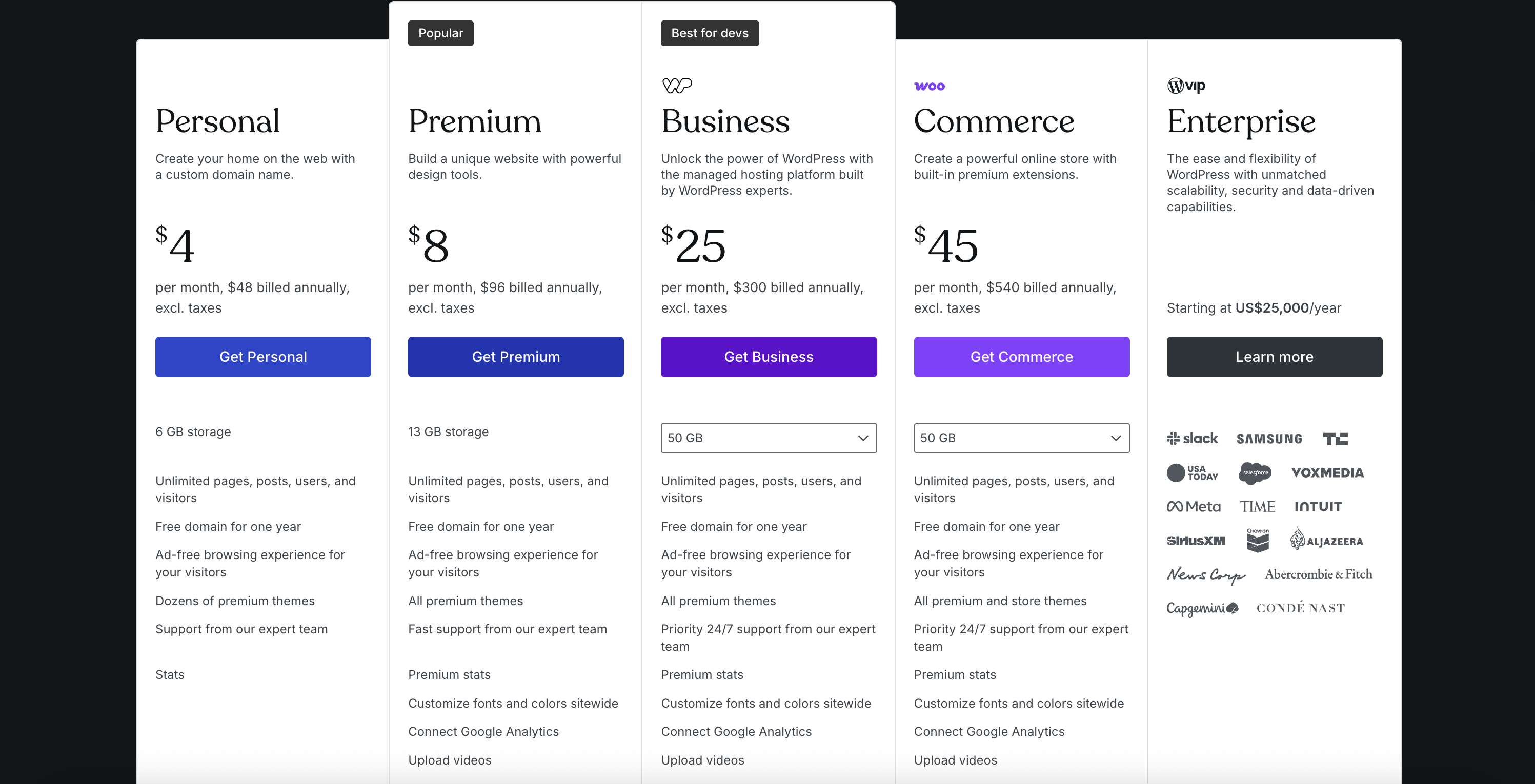
The True Cost of a WordPress Store
While the WordPress and WooCommerce software are free, running a professional store incurs costs:
Domain Name: Approx. R100−R200 per year.
Hosting: A reliable host suitable for e-commerce can range from R200−R800+ per month.
Premium Theme: R800−R1,500 (one-time cost).
Paid Extensions: Can range from R500−R3,000+ per extension per year for things like advanced shipping, bookings, or subscriptions.
Developer/Maintenance Fees: If you're not tech-savvy, you may need to budget for professional help.
Wordpress Pricing Plans
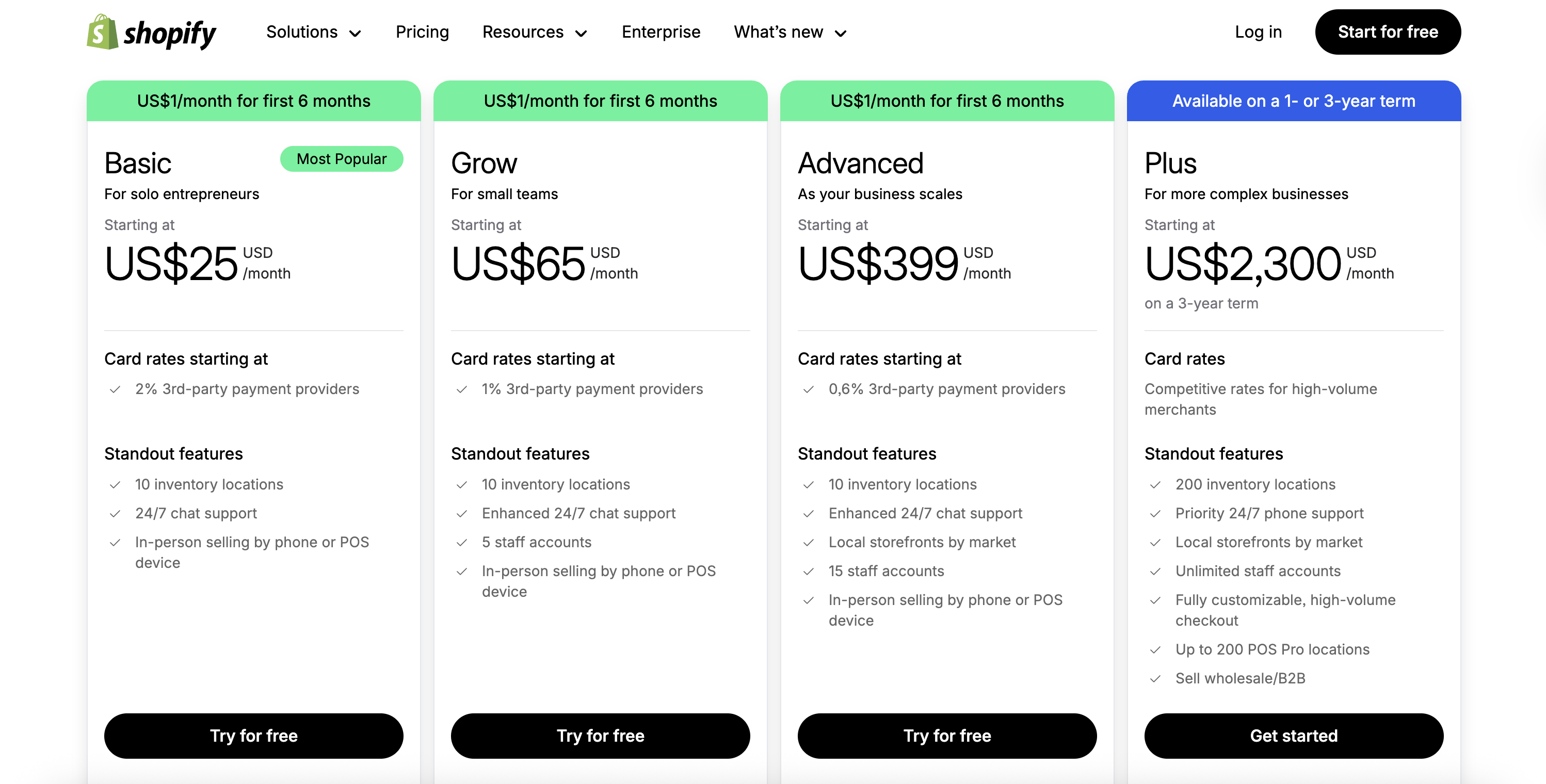
The Transparent Cost of Shopify
Shopify's pricing is straightforward, with monthly subscription plans.
Basic Plan: Ideal for new businesses. Approx. R550/month (plus transaction fees).
Shopify Plan: For growing businesses. Approx. R1,500/month (lower fees, more features).
App Costs: Premium apps from the Shopify App Store can add to your monthly bill.
Shopify Pricing Plans
Final Verdict: Which Platform is Best for You?
There's no single "winner." The best platform is the one that aligns with your budget, technical skills, and business goals.
Choose WordPress + WooCommerce if:
You want maximum design control and customization.
Your website is heavily content-focused (e.g., a large blog) with a store as a component.
You are tech-savvy or have the budget for a developer.
You want to avoid platform-levied transaction fees and use a specific payment gateway.
Choose Shopify if:
You want to launch quickly and easily with minimal technical hassle.
You prioritize security and reliability without having to manage it yourself.
Your primary focus is selling products with a streamlined, powerful e-commerce engine.
You value excellent 24/7 customer support.
Let's Build Your Perfect Online Store
The choice between WordPress and Shopify is a foundational one. Making the right decision now will save you time, money, and headaches down the road.
At Tecbot, we specialize in crafting high-performance e-commerce solutions tailored to your specific needs. Whether you need the flexibility of WordPress or the all-in-one power of Shopify, our team is here to help.